Tra Ly Lotus Fields in Hoi An | My Review After Visiting

If you’re looking for something a bit different around Hoi An, you’ll likely come across the Tra Ly lotus fields (around 40 hectares). On paper, it sounds appealing: lotus in bloom, a setting between rice fields and mountains, and very few tourists.
Let me be clear from the start. This is not a must-see in Hoi An, nor something you absolutely need to do if you’re short on time. That said, it’s an interesting spot if you enjoy photography or quieter places.
I know the area well, and Tra Ly is one of those places where it’s better to know what to expect before going. In this article, I’ll explain clearly where it is, when to go, and whether it’s really worth it.
Is it worth visiting?
I’ll be direct.
Yes, it’s worth it if you enjoy photography or if you’re looking for a quiet place away from tourist areas. The setting works well, especially in season, with lotus flowers and mountains in the background. But keep in mind that it’s a limited experience. You’ll go around it quickly, and there’s not much else to do on site.
Expect to spend 30 to 45 minutes at most to fully enjoy it.
If you’re short on time in Hoi An, this is clearly not a priority. However, if you’re already in the area or heading to My Son, it can be a quick and worthwhile stop.
Where are the Tra Ly lotus fields located

The Tra Ly lotus fields are located in Duy Son commune, Duy Xuyen district (Quang Nam province).
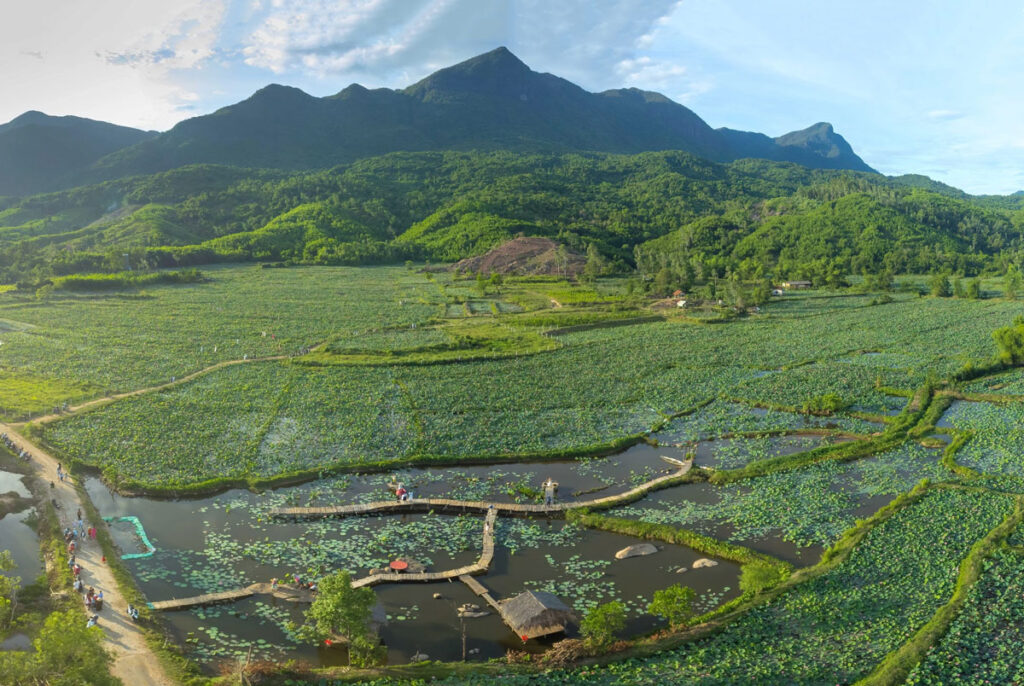
From Hoi An, it takes about 1 hour by road, and around 60 km from Da Nang. This is clearly outside the main tourist areas. The area is quite isolated, with few houses and a very rural atmosphere. It is also the largest lotus-growing area in the province, so you’re not looking at a small pond, but a fairly large area.
Important to know: this is not an officially developed tourist site. You are entering locally managed fields, with simple access but no real tourist infrastructure.
How to get there from Hoi An

From Hoi An, it takes about 1 hour to reach Tra Ly. The route is straightforward and goes through rural areas.
The site is located on the way to My Son sanctuary, but slightly off the main road, which explains why it remains relatively quiet. You’ll need to leave the main road and follow smaller countryside roads for the last part of the journey. A scooter is the most convenient option if you’re comfortable riding, or a private car if you prefer more comfort. A bicycle is not recommended due to the distance.
I recommend using Google Maps to get as close as possible, even if the location is not always perfectly accurate. Once you’re in the area, the lotus fields are easy to spot.
Best time to see the lotus
This is clearly the most important point.
The lotus season in Tra Ly runs from April to July, with a peak between May and June. This is when the fields look their best. Outside of this period, you’ll mostly see empty or partially filled fields, so the interest is limited.
To enjoy the lotus in good conditions, the best time is early in the morning, between 6am and 9am. The flowers are open, the light is better, and the temperature is still manageable. The later you arrive, the more the flowers start to close and the heat becomes harder to handle.
If you go in the middle of the day, you’ll still see lotus, but you lose a big part of the experience.
What to expect at the Tra Ly lotus fields
Once there, you’ll find large open lotus fields with very limited infrastructure.
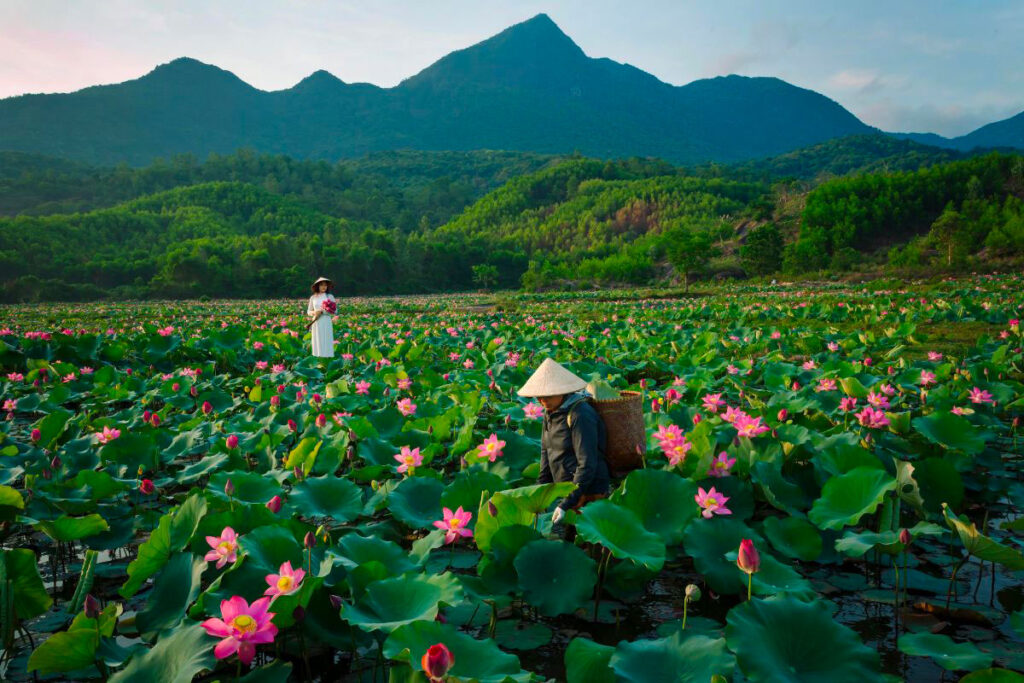
The setting is simple but works well, especially in season, with lotus stretching as far as you can see, rice fields around and mountains in the background. The contrast is great, especially for photography.
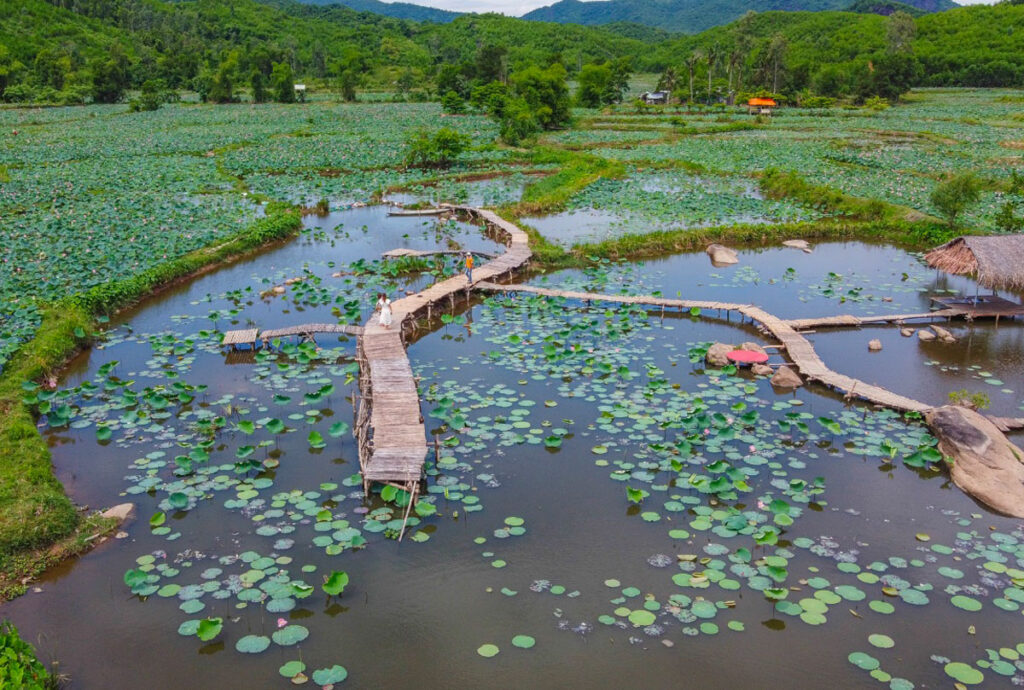
But to be clear, this is not a developed tourist park. There’s no organized path and very little infrastructure. Depending on the area, you might find a few wooden platforms or access points into the fields, but it remains basic.
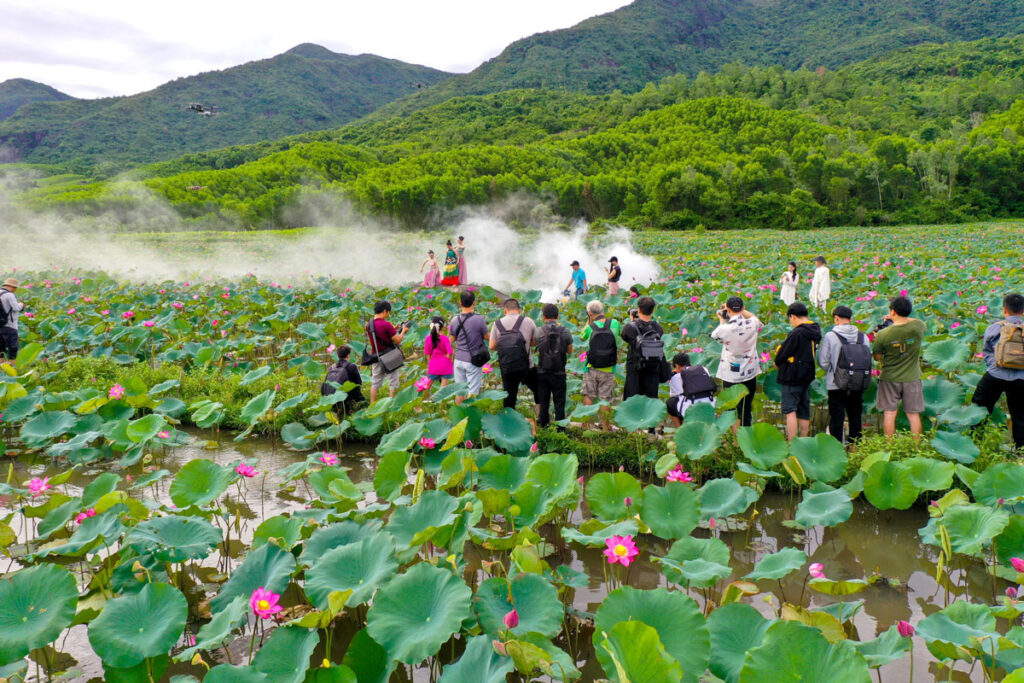
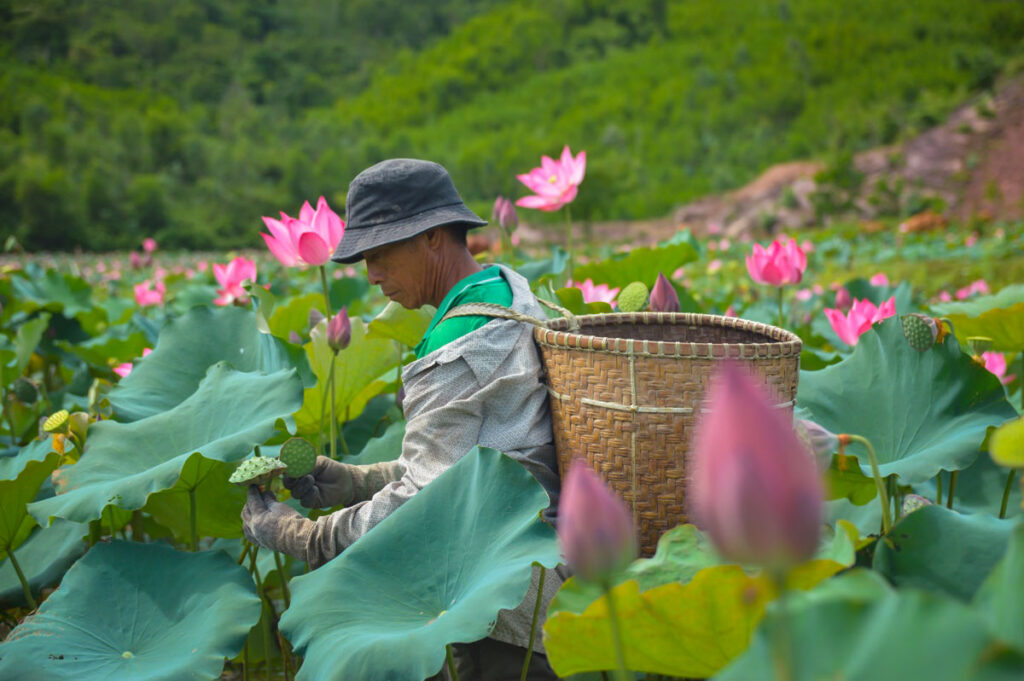
Overall, this is a raw and local place. You’ll mostly see Vietnamese visitors, especially in the morning, coming for photos.
What I liked most here wasn’t just the fields, but talking with the families who live and work around the lotus. This is a real agricultural activity, not just a photo spot.
In Tra Ly, around 100 families depend on lotus farming. The crop is grown once a year, with planting around January and harvesting about four months later. The main season then continues until August in the lunar calendar.
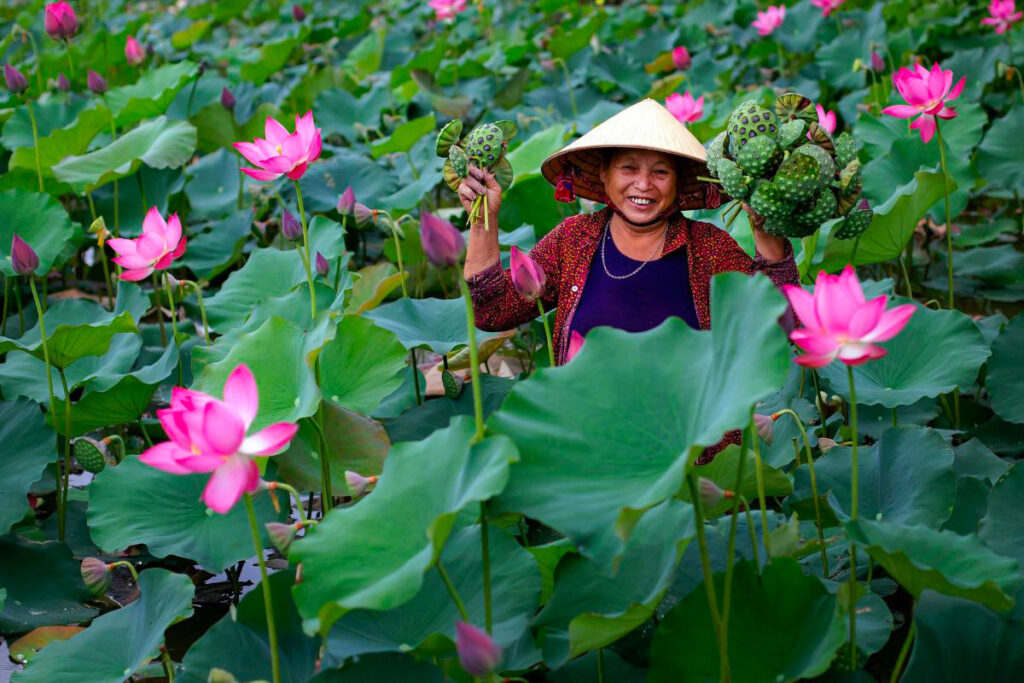
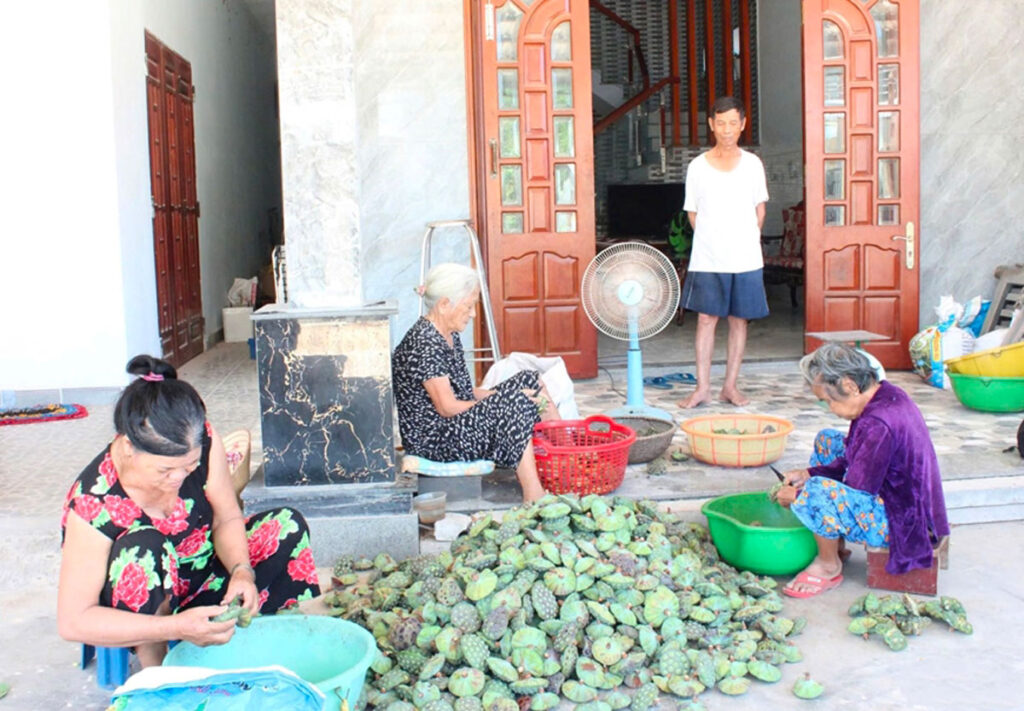
Some farmers manage several hectares. I spoke with one who harvested more than 40 kg of lotus seeds in a single morning, and explained that one hectare can generate between 40 and 50 million VND per year, often more profitable than rice. As a result, in some areas, rice fields have been converted into lotus fields.
Lotus farming doesn’t only benefit landowners. It also creates local jobs, especially for seed processing. It’s a small detail, but it shows that this is a living place, not just a photo spot.
My opinion
I’ll be direct. I wouldn’t go out of my way just for the Tra Ly lotus fields.
It looks good in season, the setting works, and you can take some nice photos, but it’s limited. You’ll quickly have seen everything, and there’s not much else to do.
However, it becomes interesting if you’re already in the area, especially on the way to My Son. In that case, it’s worth a quick stop. And if you take the time to talk with locals, you’ll realize the place has more depth than it first appears.
So to sum it up: yes as a stop, no as a main activity.