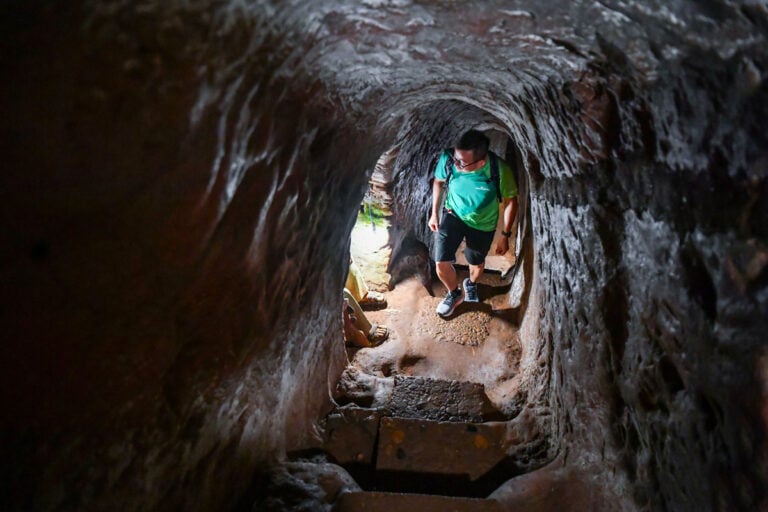
Tu Duc Tomb in Hue | Is It Really Worth Visiting?

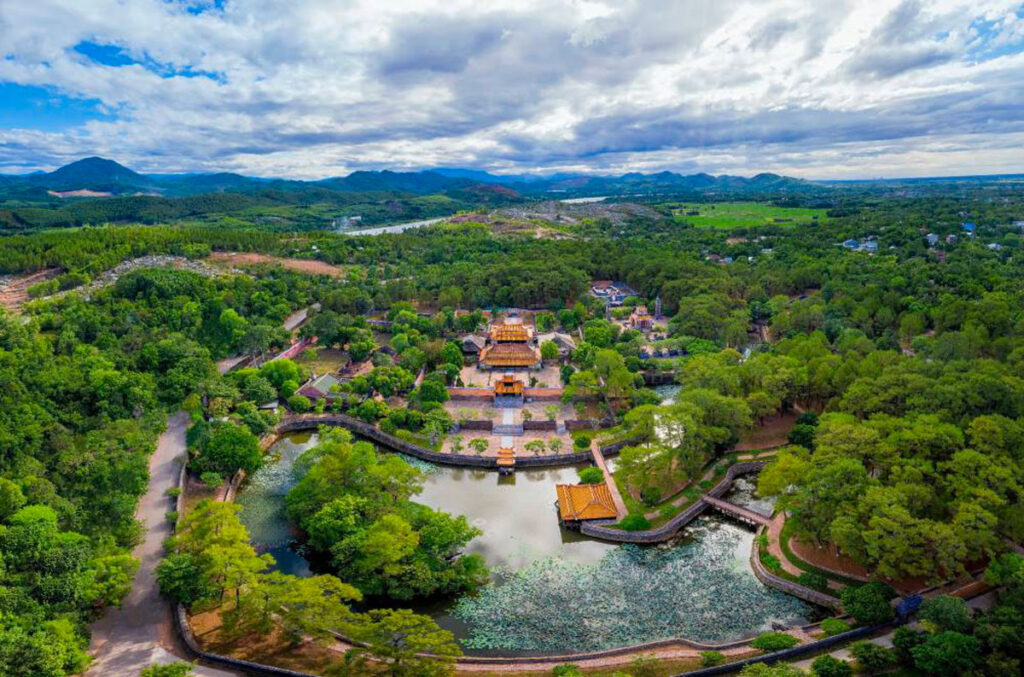
The Tu Duc Tomb is one of the best-known sites in Hue, and also one of the most pleasant to visit if you like places where architecture and landscape work together. Unlike other imperial tombs that feel more monumental or more ornate, this one is more open, calmer, and easier to explore.
Built between 1864 and 1867, this vast complex was not designed only as a burial site. It was also intended as a retreat for Emperor Tu Duc during his lifetime. That explains the site’s very specific atmosphere, with its lakes, pavilions, pine trees, and buildings spread across a large estate.
During my visit with Lam from Hue French-speaking Guide, I felt it was above all an interesting place to better understand Tu Duc’s personality. It is less about spectacle and more about a subtler and more balanced ensemble, one that says as much about a scholarly and melancholic emperor as it does about a royal tomb.
Is Tu Duc Tomb worth visiting?
If you are wondering whether the Tu Duc Tomb is worth visiting, here is my take after walking through it.
✔ What I liked
- A large and pleasant site, with lakes, pine trees, and pavilions
- A calmer and more natural atmosphere than at other tombs
- A place designed as a living residence and not only as a tomb
- Several buildings to see, which makes the visit more interesting
- A good balance between architecture and landscape
✖ What I liked less
- You need to take time to walk around, otherwise the visit loses much of its appeal
- Less spectacular than Khai Dinh Tomb if you are looking for an immediate “wow” effect
- The site may feel a bit spread out for some visitors
- Visitor numbers vary depending on the time of day
What to know before visiting

The Tu Duc Tomb is quite large, so it is better to allow a bit of time to enjoy it properly.
- Price: around 150,000 VND for adults and 40,000 VND for children
- Opening hours: summer: 6:30 AM – 5:00 PM winter: 7:00 AM – 5:00 PM
- Visit duration: allow around 1 to 1.5 hours
- Distance: around 8 km from Hue city center
In practice, this is a place where you will walk quite a bit. It is not a quick stop like some temples.
Where is Tu Duc Tomb located?

The Tu Duc Tomb is located outside central Hue, in the village of Duong Xuan Thuong, in the Thuy Xuan area.
It sits in a valley surrounded by pine trees, about 8 km from the city center. This natural setting is in fact a big part of the site’s appeal. Unlike the Imperial City, everything feels more open here. The tomb is integrated into the landscape, with lakes, hills, and tree-lined paths, which makes the visit more pleasant.
In practical terms, you are outside the city, in a much quieter environment, which feels very different from the atmosphere in central Hue.
How to get to Tu Duc Tomb


As the Tu Duc Tomb is located about 8 km from central Hue, it is fairly easy to reach.
You have several options:
- Grab (car or scooter)
- taxi
- rental scooter
- bicycle if you have time
- private car with driver
In practice, the easiest option is still Grab or a private car, especially if you plan to visit several tombs on the same day. You can check prices with Hoi An Transport Service or Voiture Privee Hue.
The ride is short, around 15 to 20 minutes from the center.
If you have more time, you can also go by bicycle. The route is quite pleasant and lets you see another side of Hue, but you need to plan for the return ride and the heat.
The Tu Duc Tomb is often combined with other sites such as Khai Dinh Tomb, Thien Mu Pagoda, and of course the Imperial City, which makes it easier to organize your day.
Who was Emperor Tu Duc?

The Tu Duc Tomb makes much more sense once you know a bit about the man himself. Tu Duc was the fourth emperor of the Nguyen dynasty. He reigned from 1847 to 1883, making it the longest reign of the dynasty.
He is known as a highly educated emperor, passionate about literature and Confucian philosophy. He left behind many writings and poems, which partly explains the calmer and more reflective atmosphere of his tomb. But his reign was also difficult. Vietnam faced growing pressure from Western powers, especially France. The country went through internal tensions, financial difficulties, and a gradual loss of sovereignty.
There was also a more personal side to it. Tu Duc had no direct heir, which caused him deep concern. He was also known for his fragile health and rather melancholic temperament. All of this is reflected in his tomb, which is not just a funerary site, but also a more intimate space, almost removed from power.
What to see at Tu Duc Tomb
The Tu Duc Tomb is quite large, so it helps to know where to look in order not to miss the important parts. The visit is mostly done on foot, following a fairly logical route between the different buildings.
1. Luu Khiem Lake and Xung Khiem Pavilion


As you enter the site, you quickly reach Luu Khiem Lake. It is one of the most pleasant parts of the complex. Along the shore, you will find several pavilions, including Xung Khiem Pavilion, where the emperor used to rest, write, and read.
It is a good place to step back a little and enjoy the overall landscape.
2. Hoa Khiem Palace

Hoa Khiem Palace was used as Tu Duc’s residence during his stays here. After his death, it was turned into a place of worship. Inside, you can see a few objects that belonged to the emperor, along with more unusual items such as a Western clock offered by France.
You can also see two thrones, including a smaller one used by Tu Duc.
3. Luong Khiem Temple

Located just behind Hoa Khiem Palace, Luong Khiem Temple is dedicated to the emperor’s mother. It is a more discreet space, but still part of the overall organization of the site.
4. Minh Khiem Theatre

Minh Khiem Theatre is one of the most interesting buildings in the complex. It is one of the oldest royal theatres in Vietnam, used for the entertainment of the emperor and his court. It shows clearly that the site was not only a funerary place, but also a living space.
5. The royal courtyard and mandarin statues

As you move through the complex, you reach a courtyard with statues of mandarins, horses, and elephants. These figures symbolize the imperial court accompanying the emperor into the afterlife.
An interesting detail: the statues are relatively small, as they were designed to remain proportionate to Tu Duc’s size.
6. The stele pavilion


The stele pavilion houses one of the most impressive features of the site. Inside is a 22-ton stone stele, the largest in Vietnam. It contains a text written by Tu Duc himself, recounting his life and expressing his personal reflections.
It is one of the rare places where you get a direct testimony from the emperor.
7. The emperor’s tomb

Finally, you reach the most symbolic part of the site: Tu Duc’s tomb. It is enclosed by a wall and remains fairly sober compared to the rest of the complex. One important point: the emperor may not actually be buried there. His burial place is believed to have been hidden elsewhere, and its exact location remains unknown.
That adds a slightly unusual dimension to the visit.
A brief history of Tu Duc Tomb


Construction of the Tu Duc Tomb began in 1864 and was largely completed in 1867. Originally, the site was called Van Nien Co, an ambitious project intended to serve both as a residence and a tomb.
But the works did not go smoothly. Construction conditions were difficult, and many soldiers and civilians were forced to take part. This led to major discontent.
In 1866, a revolt broke out, known as the Chay Voi revolt. It is an episode that is often overlooked, but it shows that the construction of this complex was not as peaceful as the site’s image suggests today.

After this event, Tu Duc changed the name of the site to Khiem Cung, which can be translated as “Palace of Modesty.” He also published a form of self-criticism to calm the situation.
Why the word “Khiem” appears everywhere
If you look at the names of the buildings in the complex, you will notice that the word “Khiem” appears very often.
This is not by chance. The term means modesty, and Tu Duc added it to many parts of the site. It is both a political and a personal choice. It reflects his state of mind near the end of his reign, while also giving the entire tomb complex a distinct identity.
My opinion on Tu Duc Tomb
Honestly, the Tu Duc Tomb is one of the most interesting sites to visit in Hue, especially if you take the time to explore it properly.
What I appreciated most is the balance between architecture and nature. This is not a place that impresses immediately at first glance, but rather a more coherent and more pleasant site to discover on foot.
On the other hand, if you are looking for a spectacular or highly visual site, this may not be the one that leaves the strongest impression. Other tombs such as Khai Dinh are more immediate. Here, the appeal is more subtle.
The visit also takes a bit of time. If you rush through it, you may not really understand the place.
If you only plan to visit one or two tombs in Hue, I would still recommend keeping this one in your itinerary. It is a good choice if you want to see a site that feels more complete and more pleasant to explore than average.