Tết, Vietnamese New Year in Hoi An | My Complete Guide

Thinking about coming to Hoi An during Tết? Great idea. Unlike many other cities in Vietnam, Hoi An’s Ancient Town stays mostly open, even during the public holidays. The lanterns are still glowing, the boat rides keep going, and restaurants in the center continue welcoming visitors.
Tết is the Vietnamese New Year, and it’s the most important celebration of the year. In most cities, everything shuts down. But in Hoi An, that’s not really the case anymore. Sure, some small shops may close for a few days, but most tourist activities continue as usual. And there’s even a special festive vibe that makes it worth experiencing.
In this article, I’ll explain what you’ll actually experience if you come to Hoi An during Tết: the atmosphere, the schedules, what stays open, what changes, and how to avoid unpleasant surprises.
What is Tết, exactly?

Tết is the Vietnamese Lunar New Year. It’s kind of like Christmas and New Year combined… but Vietnamese style. People clean their homes, decorate with kumquat trees and yellow flowers, prepare traditional dishes, and most importantly, spend time with family.
The lunar calendar changes every year, so the date of Tết varies but it usually falls between late January and mid-February. Official public holidays last about a week, though in reality, some offices and shops stay closed longer.
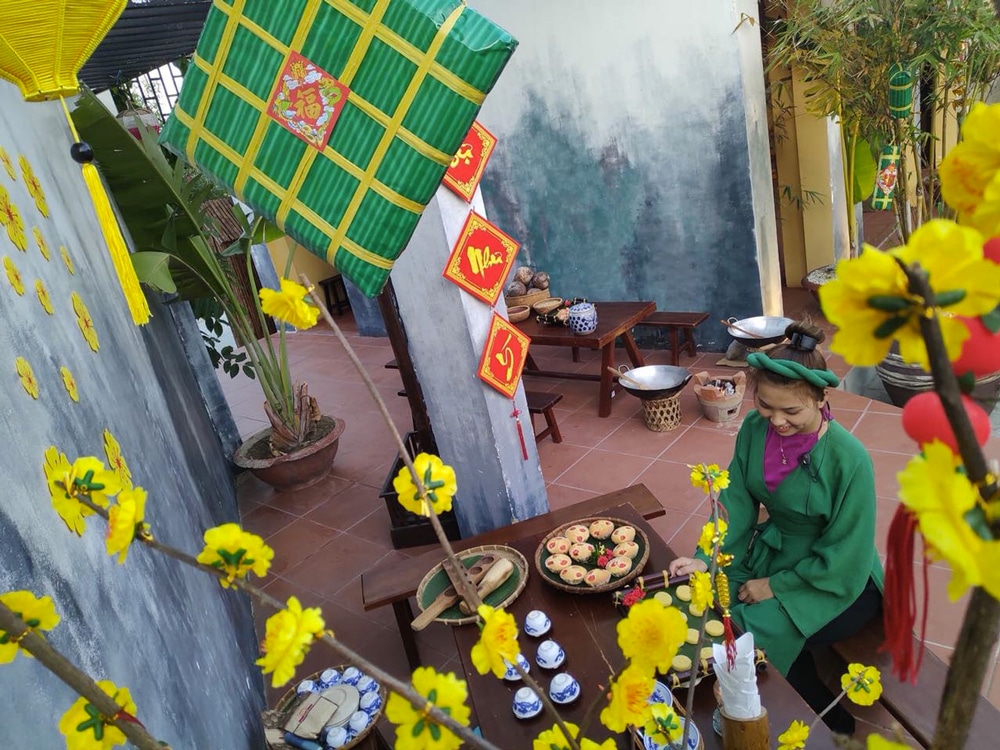
Here are a few typical traditions:
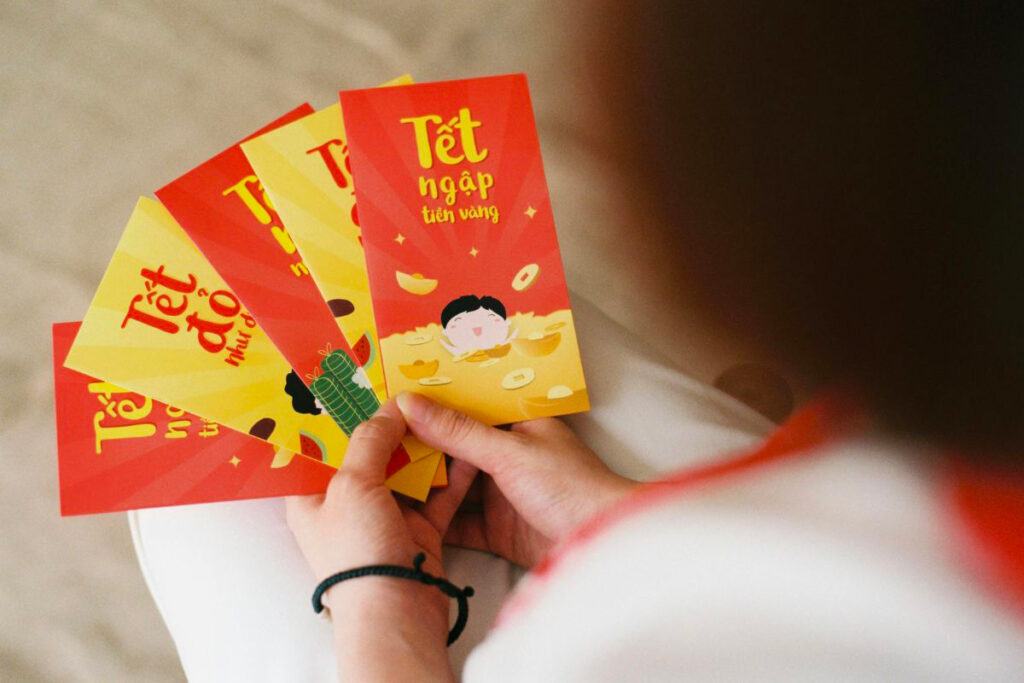
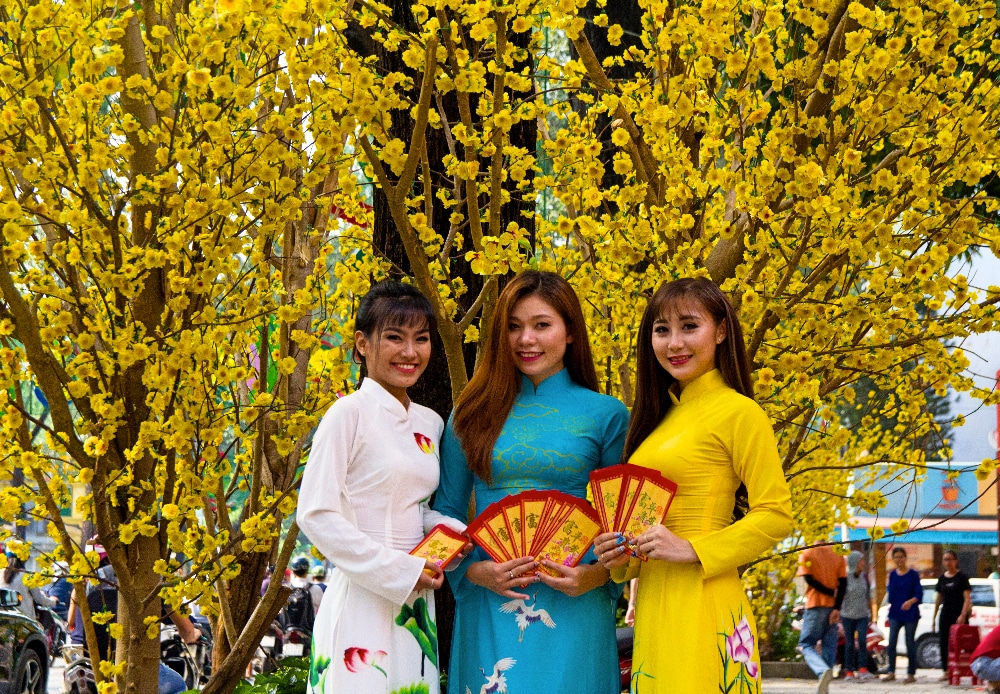
- “Lì xì” (red envelopes) filled with money, given to children and elders.
- Flowered altars in homes and businesses.
- Family visits in a strict order (starting with the parents, then in-laws, and so on).
- Important note: If a family member has passed away recently, you’re not supposed to visit others during the first days of Tết.
- And of course, the famous bánh chưng or bánh tét, a sticky rice cake with savory filling, made at home with family.
But all of this is mostly on the local side of things. As a traveler, what you’ll want to know is: what actually changes in a place like Hoi An during Tết? Well… let me tell you.
When is Tết?
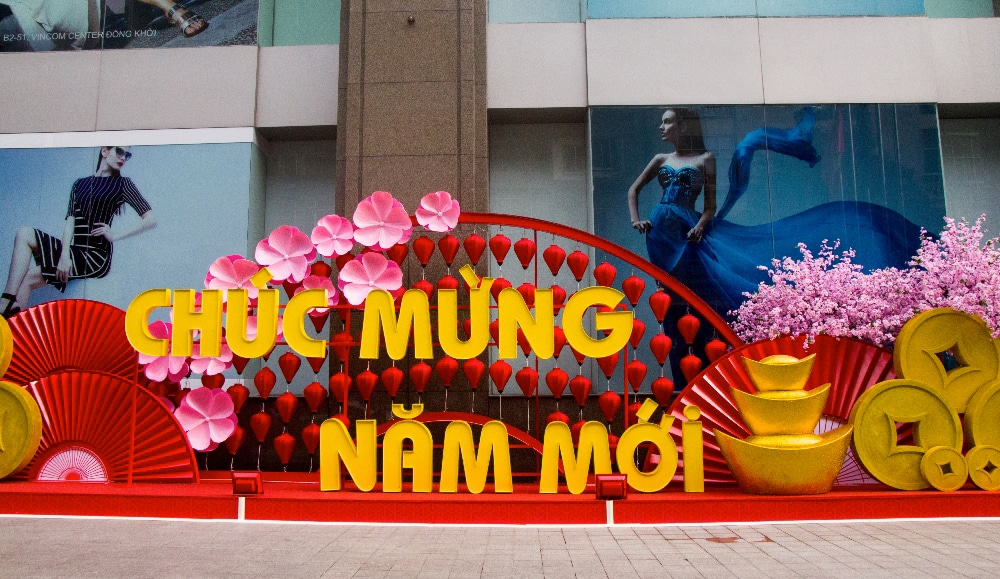
Tết doesn’t fall on the same date every year. It’s the Lunar New Year, so it follows the Chinese calendar. Usually, it happens between late January and mid-February. But be careful, it’s not just a one-day celebration!
The official Tết day is the first day of the lunar calendar, but Vietnamese people start preparing one to two weeks in advance, and keep celebrating for about a week afterwards.
For example, in 2026, Tết will fall on Wednesday, February 18. But by the weekend before, you’ll already feel the vibe: markets are packed, families are doing deep cleaning at home, and everyone is making their final purchases for ancestral offerings.
If you’re planning to visit during this time, book your transportation well in advance, as buses, trains, and flights are usually fully booked just before and after Tết.
Is Everything Closed in Hoi An During Tết?

This is the big question everyone asks. And the answer is simple: no. Unlike other regions in Vietnam, Hoi An mostly stays open during Tết, and this has been the case since around 2021–2022.
Of course, on Tết day itself (New Year’s Day), some family-run shops may close for a few hours or even the whole day. But by the next morning, most restaurants, cafés, tailors, spas, and even tourist activities are back to business as usual.
And to be honest, Hoi An never really stops. Even during Tết, you’ll still find:
- Lanterns lit up every evening in the old town
- Open restaurants
- Taxis and private cars still operating (just make sure to book ahead)
It’s worth noting that the city remains lively and open, with shops, cafés, restaurants, and outdoor activities fully accessible. However, some public buildings like museums, ticketed temples, or heritage houses may be closed for a few days.
Before vs. During Tết in Hoi An: Two Very Different Vibes
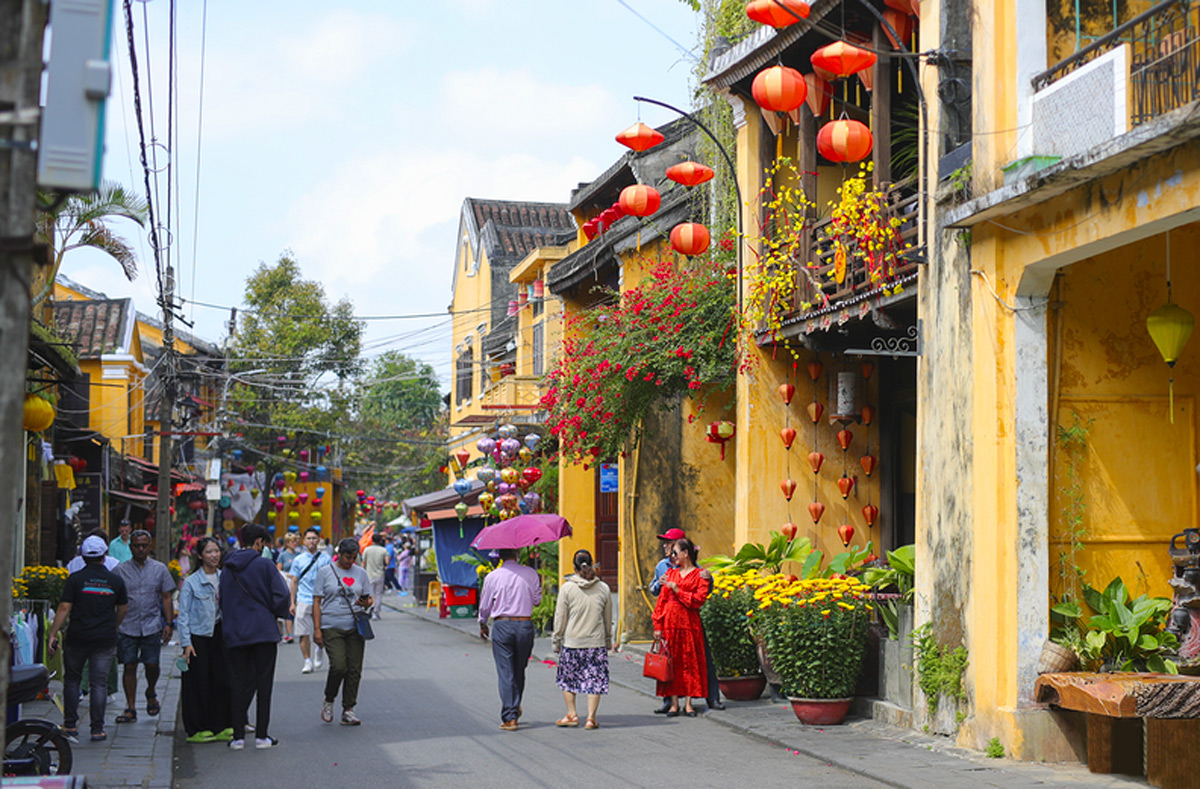
If you arrive one week before Tết, you’ll get to experience Hoi An at its most vibrant. Preparations for the Vietnamese New Year are in full swing: houses are freshly painted, the famous yellow walls shine, red decorations are everywhere, families are placing kumquat branches, and a flower market pops up across town. The vibe is cheerful and buzzing. It’s a wonderful time to stroll around, take photos, and observe traditional rituals at a relaxed pace.
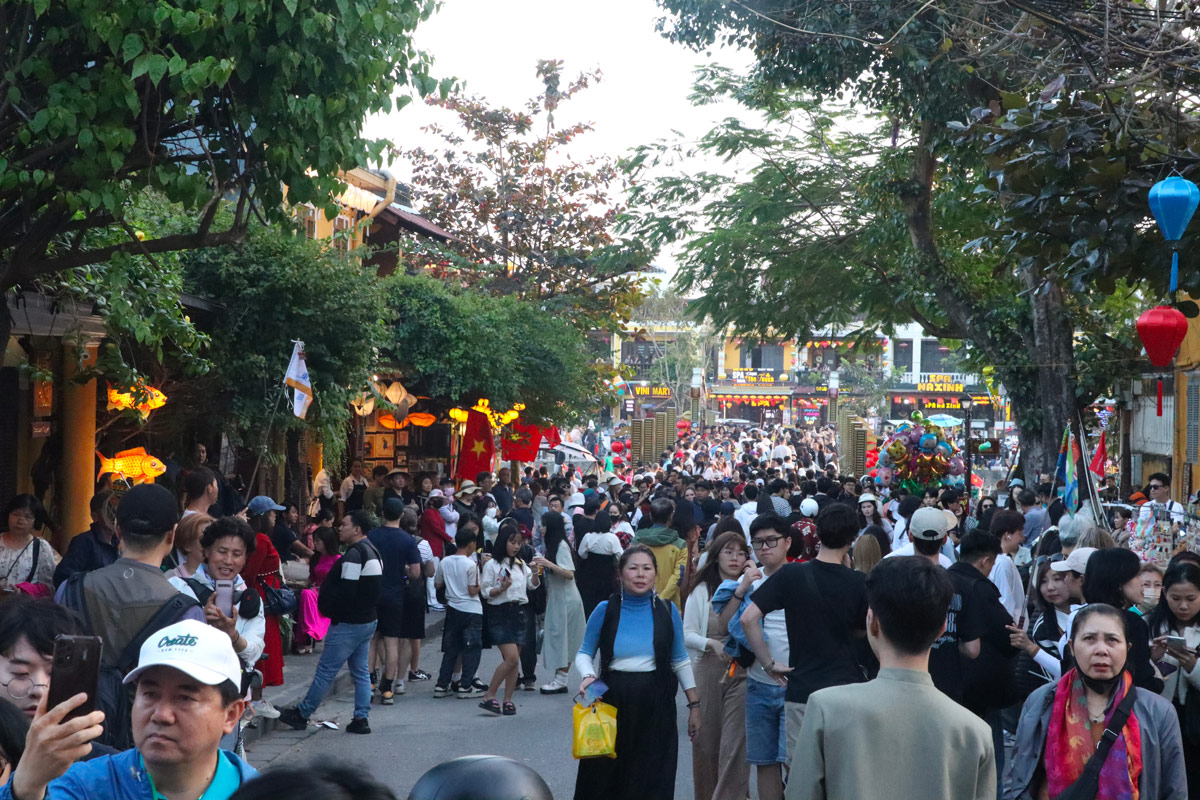
But once Tết officially begins, everything changes. Vietnamese visitors flood into Hoi An, especially from Da Nang, Saigon, and Hanoi. The Old Town gets packed, especially in the late afternoon and evening. If you’re not a fan of crowds, try to avoid peak hours or stick to quieter side streets.
Living in Hoi An, I’m lucky enough to dodge the busiest times during the New Year.
Be Careful with Theft During Tết
Just a heads-up: theft tends to increase during Tết, especially in busy tourist areas like Hoi An. The town is packed, people are everywhere, and in the middle of the crowd, some take advantage. This isn’t unique to Hoi An, it’s a reality across Vietnam during this time.
Pickpockets usually go for phones, wallets, or bags. If you’re carrying a purse or camera bag, keep it in front of you. Don’t let your phone stick out of your back pocket. And avoid walking around with flashy jewelry or a wallet stuffed with visible cash.

Even in hotels, it’s best not to leave valuables in plain sight. A small lock on your suitcase, or stashing your bag inside a closet, is usually enough to deter opportunistic hands.
I’m not saying this to scare you, just so you can fully enjoy your Tết experience without any nasty surprises.
What to Do in Hoi An During Têt?
Even though the pace slows down a bit, Hoi An remains a beautiful city to explore during Têt. And in fact, some things become even more special at this time of year. Here’s what I recommend you don’t miss:
1. Admire the freshly repainted and decorated houses

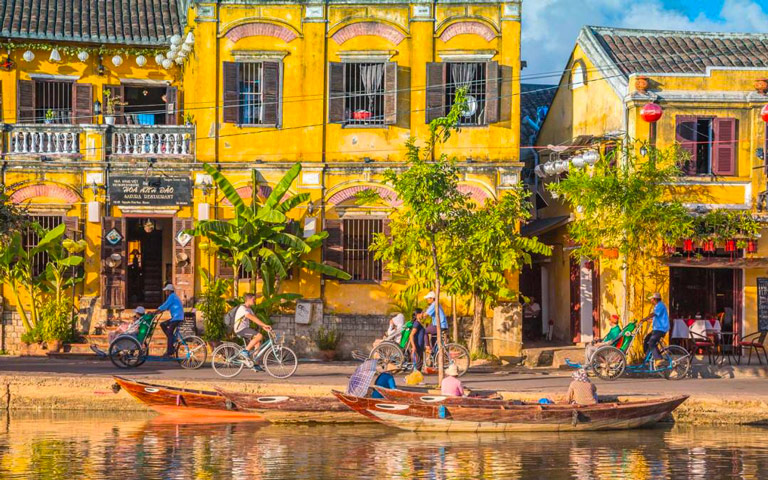
Many families take this opportunity to repaint their façades. The result? Hoi An’s iconic yellow walls are more vibrant than ever. It’s the perfect moment to admire the architectural details, with beautiful light in January and February.
Also note that most houses are decorated for Têt: red envelopes pinned to the doors, red lanterns hanging outside, and sometimes even bánh chưng (sticky rice cakes) placed as offerings.
2. Watch the Lunar New Year fireworks

A fireworks display is held on New Year’s Eve, usually around midnight, launched from the riverside or one of the bridges. It’s not always announced in advance, but you’ll definitely spot it if you’re there at the right time.
There’s always a big crowd, so plan to arrive early if you want a good spot.
3. Watch the Grand Parade in the Old Town (Têt’s Eve)


In the early evening on the eve of Lunar New Year, a vibrant parade takes over the old town: traditional costumes, live music, drums, lanterns, lion and dragon dances…
The atmosphere is joyful, lively, and truly unique – a perfect time to soak up the festive spirit with the locals.
4. Visit the Central Market of Hoi An Before Têt
An absolute must-see. A few days before Vietnamese New Year, the central market becomes a bustling hive of activity:
- Hundreds of flowers
- Piles of fruit for family altars and offerings
- Bánh chưng, red envelopes, and special ingredients for Têt meals
The energy is electric. People are running around, bargaining, shopping, preparing. It’s the best place to feel the excitement of a real Vietnamese New Year and watch traditions in action.
Go early in the morning if you prefer it calm… or during the busy peak hours to enjoy the full show!
5. Visit the Pagodas on the First Morning of Têt

On the morning of Lunar New Year, pagodas in Hoi An fill with Vietnamese families who come to burn incense, pray, and make offerings. The atmosphere is solemn, sincere, and full of spiritual energy.
If you’re curious about local culture and traditions, don’t hesitate to stop by.
6. Admire the Têt Decorations in the Old Town

As Têt approaches, the old town of Hoi An transforms: yellow flowers, kumquat trees, potted plants, and red lanterns appear on every street. The vibe becomes cheerful and festive just a few days before the big day. It’s colorful, symbolic, and perfect for photos.
Don’t miss the flower market, usually set up in the streets surrounding the old town, where you’ll find stalls filled with chrysanthemums, lucky plants, and New Year decorations.
In 2025, the market was unfortunately moved to the outskirts… but I hope it returns to the historic center for Têt 2026, because that’s where it truly belongs and where it shines the most.
7. Join a New Year’s Eve Celebration
If you’re in Hoi An on the eve of Têt, try to experience the evening like a local. Each neighborhood hosts its own small street celebration, often with shared meals, speeches, and even impromptu karaoke. If you’re staying in a homestay, there’s a good chance you’ll be invited to join – don’t hesitate, it’s always warm and authentic.
And if you don’t have this opportunity, the central market of Hoi An also hosts a cheerful public celebration with the market vendors. Expect a friendly atmosphere, singing, karaoke, and plenty of smiles to kick off the new year.
8. Play Giant Bingo at Sông Hoài Square
Every year, the square by the river (Sông Hoài, right next to the night market) becomes the stage for an old-school Vietnamese bingo night, animated by a lively host on a microphone. It’s a traditional outdoor game with paper cards, small prizes, and a fun, light-hearted atmosphere.
Even if you don’t understand the numbers shouted in Vietnamese, it’s a fun and unique moment, especially in the late afternoon, just before the parade or the lion dances.
9. Watch a Traditional Boat Race in the Old Town
On the morning of the first day of Têt, the neighborhoods of Hoi An compete in a traditional boat race on the Thu Bồn River, right in the heart of the old town. Each team represents its district, and the atmosphere is electric – drums, cheers, battle cries, colorful flags…
It’s both a sporting event and a deeply cultural tradition, cherished by locals. If you’re up early, find a spot on the riverbanks across from the launch point: you’ll get a great view of the action and feel the energy of the crowd.
10. Observe the Offerings Prepared by Locals

As you stroll around, you’ll often spot small altars in front of houses and shops – with incense, flowers, cakes, fruit, even alcohol. These are offerings to honor the ancestors. It’s discreet, but deeply authentic, and gives you a rare glimpse into local spirituality.
You’ll start seeing them on New Year’s Eve, just after the fireworks, whether you’re wandering the old town or simply heading back to your homestay.
My Tips if You’re in Hoi An During Tết
If you’re in Hoi An for the Lunar New Year, it’s best to plan ahead to avoid any last-minute stress.
Carry Some Cash
Even though most shops stay open, banks are closed during Tết. Some ATMs might be empty or out of service due to the high demand. Having some cash on hand will save you a lot of hassle on the big day.
Book Your Accommodation Early
Hoi An has become a very popular destination for Vietnamese tourists during Tết, so hotels can get fully booked, and prices may increase. Better to secure your stay in advance.
Buy Your Transport Tickets Ahead of Time
Flights, trains, private cars, and buses all fill up quickly around Tết. Many locals travel to see their families, so expect heavy travel traffic before and after the holiday.
Bring a Small Gift if You’re Invited
If you’re lucky enough to be invited into a Vietnamese family’s home, bring a little something: fruit, sweets, or a red envelope (li xi) with a bit of money for children or elders. These are simple but very appreciated gestures, even if you’re a foreigner.
Bring a Jacket
It’s not cold like Hanoi, but the weather can be chilly in the evenings. A light jacket will do the trick, but don’t expect to sunbathe in February.
My Opinion
Spending Tết in Hoi An is a truly special experience. You’re far from the chaos of Hanoi or Saigon, here, everything feels calmer, softer, but never boring. The lanterns are stunning, the streets are clean, the houses freshly painted in bright yellow, and there’s this unique atmosphere you won’t find at any other time of year.
Sure, prices go up, locals are on holiday, and some services slow down… but honestly, Hoi An remains one of the very few places in Vietnam where you can enjoy Tết without the city shutting down completely. It’s clean, peaceful, full of flowers and light.
If you enjoy festive vibes without too much crowd, if you’re curious about traditions and ready to step off the beaten path, then I truly recommend being in Hoi An for Tết.