Tan Ky old house in Hoi An | Is the visit worth it?

The Tan Ky Ancient House is one of the most well-known historic buildings in Hoi An’s Old Town. Built in 1741, this merchant house has remained in the same family for seven generations. Today, part of the house is open to visitors, while the owners still live upstairs.
It offers a well-preserved example of a 200-year-old merchant house, with an architecture that blends Vietnamese, Chinese, and Japanese influences, similar to the Duc An House, which I will cover in another article.
For years, I walked past this house while crossing the Old Town. It’s one of my favorite streets in Hoi An, and when I first arrived in 2012, I used to work every morning at the Cargo Club café.
Where is Tan Ky Ancient House in Hoi An

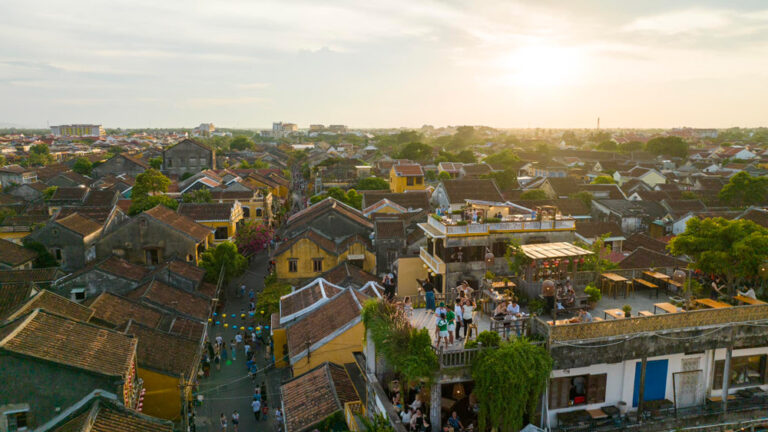
The Tan Ky Ancient House is located at 101 Nguyen Thai Hoc in the Minh An ward, right in the heart of Hoi An’s old town. This street is one of the busiest in the historic center, with many shops, cafés and old houses open to visitors such as Tam Tam Café, Cargo Club and Morning Glory.
A brief history of Tan Ky House

The merchant Le Cong
The Tan Ky House was built in 1741 by a Sino-Vietnamese merchant named Le Cong. At that time, Hoi An was a very active trading port and many families lived from river commerce.
Le Cong made his fortune through the trade of agricultural products. He sailed up the Thu Bon River to purchase goods from inland regions, especially from the highlands. The merchandise was then brought back to Hoi An and sold to local traders or foreign merchants.
A family home and trading house

The house served both as a family residence and a trading place. Its layout perfectly reflects the commercial organization of the city at that time. The front of the house faces Nguyen Thai Hoc Street, where the family shop was located. At the back, the house opens onto the Thu Bon River, allowing goods to be unloaded directly from boats before being stored and sold from the street side.
This type of house was very common in Hoi An when the town was a major trading port between the 17th and 19th centuries. Many buildings in the historic center were built following this model.
A few decades later, the next generation gave the house the name Tan Ky, which means prosperity in business.
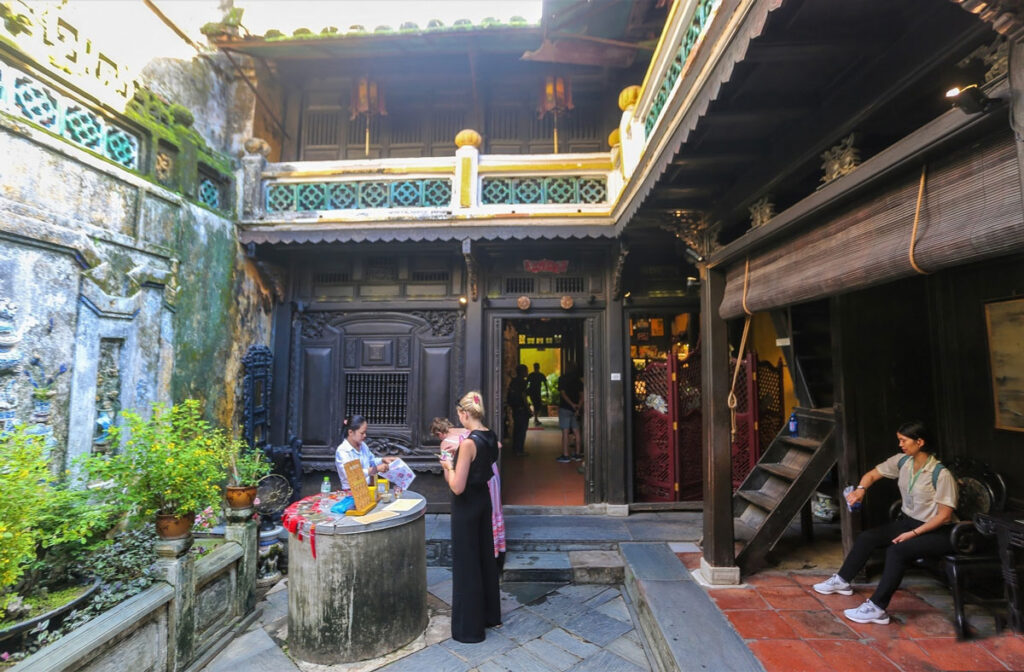

An unusual detail today: the house still belongs to the same family. After seven generations, the descendants still live upstairs, while the ground floor is open to visitors.
During the 20th century the situation gradually changed. The silting of the Thu Bon River mouth prevented large trading ships from reaching the port. Maritime trade in Hoi An declined and the Le family’s business eventually came to an end.
An architecture blending three influences
One of the most interesting aspects of the Tan Ky Ancient House is its architecture. The house combines three cultural influences present in Hoi An at the time: Japanese, Chinese and Vietnamese.
This combination reflects the city’s history as an international trading port visited by merchants from across Asia.

1. Japanese influence
Some parts of the house follow principles related to feng shui, with an organization based on the elements Metal, Wood, Water, Fire and Earth.
The roof uses yin-yang tiles, commonly found in historic buildings in central Vietnam. This roofing system helps regulate temperature, keeping the house cooler during the hot season and more comfortable during cooler periods.
2. Chinese influence
The house also follows the typical long layout of Hoi An merchant houses. These buildings are usually narrow but very deep.
Inside, the spaces are divided into several consecutive rooms. The house has few windows, but it remains well ventilated thanks to a central skylight that allows natural light and air to circulate.
3. Vietnamese influence
The structure also follows the traditional Vietnamese model with three bays. The most notable elements are the carved wooden columns, beams and rafters.
Several symbolic decorative motifs can be found inside the house, such as:
- peaches, symbolizing longevity
- bats, associated with happiness
- pomegranates, symbolizing prosperity
These decorations were common in the homes of prosperous merchant families.
A house built entirely from wood
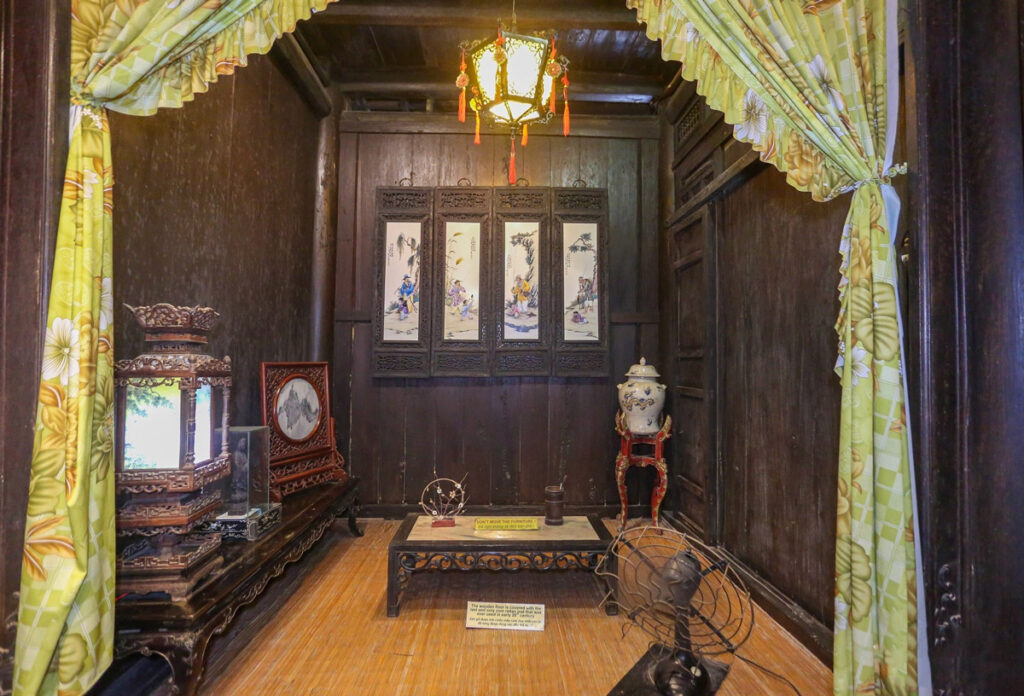
The Tan Ky House is built almost entirely from wood, which was common for merchant houses in Hoi An at that time.
The main structure is made of ironwood, a very dense and durable wood used in many historic Vietnamese buildings. The doors are made from jackfruit wood, a material known for its durability and resistance to humidity.
Some decorative materials come from different regions of Vietnam, including Bat Trang, Thanh Hoa and Non Nuoc, known for their ceramics and stone craftsmanship.
A Nail-Free Construction
One technical detail often catches visitors’ attention: the house was built without nails.
The columns and beams are assembled using a traditional mortise and tenon system. The wooden pieces fit into each other, which strengthens the structure while allowing the wood to adapt to changes in humidity and temperature.
Some historical objects preserved in the house


In addition to its architecture, the Tan Ky House displays several historical objects belonging to the family.
One of the most famous items is a cup known as the “Confucius Cup”. According to family archives, it is believed to be 550 to 600 years old and has been kept in the house for more than 200 years.
This cup has a surprising feature: it can only be filled to about 80% of its capacity. If too much liquid is added, the cup empties itself through a hidden mechanism. In traditional philosophy, this object symbolizes moderation and self-control.

You can also see several antique pieces of furniture, including a table and chairs made from precious wood, as well as various decorative items passed down through the family.
Today, a small part of the house is used to display souvenirs and handicrafts that no longer really have any connection to the place. The main interest remains the architecture and the history of the house.
What I liked
- Merchant house over 200 years old
- architecture blending Japanese, Chinese and Vietnamese influences
- still inhabited by the same family
- located in the heart of the old town
What I didn’t like
- very short visit (about 20 minutes)
- often crowded with tourists
- part of the ground floor has been turned into a shop

What you should know before visiting Tan Ky House
- Address: 101 Nguyen Thai Hoc
- Opening hours: 8:30 AM – 5:45 PM
- Ticket: included in the Hoi An Old Town ticket
- Visit duration: about 20 minutes
- The house is still inhabited
My opinion
The Tan Ky Ancient House is one of the classic stops in Hoi An’s old town. If you have the ticket for the historic center, you will probably pass by it since it is located on one of the busiest streets in the city.
The visit is quick, around 20 minutes. Visitors mostly walk through the ground floor while a guide explains the history of the house and the objects on display.
What I find most interesting is the wooden structure and the typical layout of Hoi An merchant houses. It gives a good idea of how families lived and worked when the city was still an active trading port.
If you are exploring the old town, it is worth stopping by. But keep in mind that the house is quite small and the visit is short. It is usually combined with other places included in the historic ticket such as temples, museums or other old houses.